Finding Contented and Useful Ordinariness —Embodying Sushumna Nadi

Classically sushumna nadi is considered to be the empty channel at the center of the subtle nervous system through which kundalini flows heralding the dawn of self-realization. Kundalini rising is largely recognized to happen in a state of deep meditation where one is in a complete state of transcendence and loses all awareness of the physical plane. It is hinted at, but not emphasized, what ones experience might be to live in a state where sushumna is flowing freely and supporting our everyday life and perceptions.

When sushumna has opened it is the beginning of our ability to perceive how the radiance of consciousness is penetrating all layers of life. This gives a fully embodied texture to what we can experience when sushumna nadi has opened.  Its radiance is felt not only in the spine itself, but also through the structural core from the perineal body to the mid brain and the crown. This is what we have referred to in Embodyoga® as the embodiment of sushumna. It correlates with the experience of the notochord. The notochord is not sushumna itself, but is one of its first tangible expressions into form. It is a sensory experience. It is not an experience of the same qualities of senses that we direct outward into the world to bring information back into us. It is an inner direction of subtle senses; subtle senses that are more refined and delicate. They are drawn inward by Awareness rather than drawn outward by objects. They feel, taste, touch, hear, and smell the beauty of life manifesting into form. This is a sensual and sensory witnessing of the nature of reality manifesting that is not reserved for deep meditation, but is available at the grocery store too.

One could argue that any embodied sensation, however subtle, cannot be sushumna because sushumna has no physical structure whatsoever. Purists may say that the radiance of awareness that emanates from sushumna cannot be experienced as a sensory event of any kind. I understand that argument. But it doesn’t correlate with my own experience.

It is well known that the sensation of kundalini shakti rising through sushumna can be felt. Why not then, when the channel is open, would we not continue to feel an evolution – or a growth – of that experience/awareness that penetrates through everything?
This way of perceiving the channel of sushumna includes two different layers of experiencing. We perceive the radiance of sushumna in our spine and in our central body core. It is not the channel so much as it is what the channel holds – Radiant Awareness – that we are actually describing.

I think it is important as embodied beings that we inquire into the possibility of feeling the radiance of Awareness in our lives, and not simply in a rare state of transcendence.

I find that relating this subtle experience of Unity in action to sushumna is useful for living. There is core radiance through our center that is related to the remnant of the notochord and contains more awareness than it does form. If we perceive sushumna as a channel that is non-perceptible it will definitely remain that way. By exploring the idea that the radiance of pure awareness is genuinely present and available to experience we open to a deeper level of reality. We stop limiting our perceptions. The notochord radiance is there and it feels like light and awareness. Let’s call it sushumna… or not. It doesn’t really matter what it is called. The trick is to notice it.

This is a very direct method for feeling the radiance of awareness as support – not just for mind – but also for body as an ongoing and direct experience. This is support for life and living. It is support for effective action and establishing ones personal dharma. It feels like a necessary process for living life in fullness. Again these are not techniques for being happy, but for being content in the knowledge that your life is what it should be. This is an important doorway for achieving satisfaction in life, in an embodied existence, in a relational world where each of us is only a small part, no more or less important than any other, and subject to the joys and sorrows of our fellow beings. This is not a path toward becoming special or great. This is a path toward contented and useful ordinariness.

Embodying Meditation—Dharana, Dhyana, and Samadhi

pat1

The last six of the eight limbs of Classical Yoga are:

Asana – a sweet and steady posture

Pranayama – recognizing, expanding, and balancing the inner life force

Pratyahara – turning our perceptive senses inward toward subtle awareness

Dharana – collecting the flow of consciousness into a single direction

Dhyana –  the spontaneous flow of consciousness in a single direction due to the compelling subtle qualities of the object

Samadhi – union, absorption, no perceptual separation between  experiencer, the act of experiencing, and the object of perception

The process of embodiment is yoga. In Embodyoga® we use the practices of dharana, dhyana, and samadhi as the foundations for our inquiry into the nature of our form. We utilize the terms “inquiry”, “somatization”, and “embodiment” in order to place our meditation within our form and function. From our perspective, we focus on all aspects of body-mind as the subjects and objects of meditation. Using asana, pranayama, pratyahara, and dharana, we refine our processes of perception to experience the great gifts of yoga, dhyana and samadhi.

We explore our body-mind system to discover our innate intelligence just as we follow a thought to its source in practices of the mind. You may say, that the body is constantly changing and ultimately will dissolve and decay, and therefore it is not suitable as an object for meditation.  And I will say to you, “just like mind.” Mind and body are both equally subject to decay, death, and dissolution. The nature of the perceiving awareness is empty, awake, and free of clinging.  This reality is at the source of both body and mind and is fully available to experience from either starting place.  Curiosity spurs our inquiry. Without curiosity nothing happens at all. Curiosity is deeply interwoven with desire in its purest form. The importance of recognizing and cultivating our natural curiosity cannot be overstated.

Dharana | Inquiry
We practice dharana — inquiry — to collect and direct our thinking, sensing, and feeling toward a chosen aspect of body-mind. We channel our inquiry in a single direction. As our experience becomes more focused, our attention begins to flow more effortlessly in the direction of our chosen object. This is dharana. Since our inner body and its functions may be unfamiliar to us, we utilize visualization, movement, and touch to stimulate our conscious awareness. As our awareness settles into our chosen resting place, a deeper experience of body-mind is revealed. When the flow of awareness becomes effortless and we are thoroughly engrossed in the process, we call it somatization.

Dhyana | Somatization
Somatization is the body’s expression of the mind’s state of dhyana or meditation.  There is still a subject  (I) and an object (our chosen focus).  When we somaticize, we are involved in intimate communication with our object, experiencing its sensations and qualities on every level.  There is clear delineation between experiencer, or subject; experiencing, or    relationship; and the object of perception.  This exploration can be a very satisfying process that offers tremendous insight and information about both subject and object, but it is not samadhi, and it is not embodiment.  Embodiment is samadhi.

Samadhi| Embodiment
In full embodiment, there is no perceptual separation between subject, object, and the communication between them.  There is only act of experiencing, which is the union of all three. Awareness of self as separate from experience or experiencing dissolves completely into the radiance of pure awareness recognizing itself. The process of yoga starts where we are.  It begins and it culminates in the psycho-physical-spiritual expression of life,.  It is all happening right here, right now, in this body, this mind, the immediate environment, the community, and the world.

Dharana, dhyana, and samadhi are the culminating steps in Classical Yoga.  By adopting a Tantric approach to our bodies, we incorporate these practices that have been reserved for the mind into a whole-body-mind practice.  We accept the fact that mind and body have exactly the same source and are of equal value for our inquiry into the nature of life.

Every one of us is absolutely good enough exactly as we are right now, and we can see life as it actually is. It is not necessary to improve, evolve, and get smarter or better in any way. As long as we are trapped in the idea that we need to change in order to find clarity, we will never settle and do the simple work of seeing what is actually true now.

Mulabandha — Prana, Embryology & Core

Embryology
At this point most of us are willing to accept that our physical structure develops and grows from some combination of intelligence, energy, and matter. Matter is the stuff of which we are made. Energy is its process of movement. Intelligence guides its growth. Nowhere is this more evident than in the embryological time.

An awe-inspiring amount of creativity and intelligence expresses in our embryological development. Each phase of development is fascinating and reveals core truths that we live with for the rest of our lives; templates of organization and connection, that may no longer be evident to the eye, but form support structures and relationships that remain with us throughout our life. Often in yoga practice we find that some of the earliest templates of organization from embryology relate very clearly to yogic principles of support and awareness. This is particularly clear when we are observing the flow of prana. Our embryology offers important clues for practice and validates some of the more advanced practices in yoga and the more esoteric descriptions of the inner world that accompany those practices.

The pranic-flows form the templates – the energetic scaffolding – upon which our structure grows. When we look to our embryology with an eye toward Tantric philosophy, we find that prana and apana were present from our earliest beginnings and that it appears/feels that they created the polarity of life force between them upon which our core – our spine and subtle spine – developed.

According to the tantric picture, apana and prana are attracting and repelling one another right from the very beginning. Their opposing energies create a dynamic force between them. It is along this axis of pranic repulsion and attraction that the primitive streak and the notochord initially develop. This is our first central channel – our first structural core.

Gastrulation_1

Embryonic Disc—

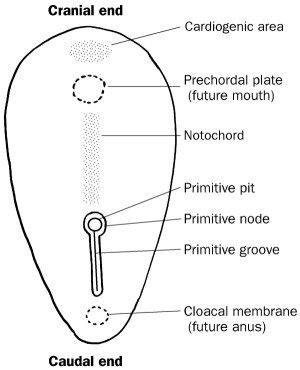
In early gestation, from about nine to fourteen days after fertilization, we are nothing more than an embryonic disc. We already have a top and a bottom and a front and a back to our disc. We haven’t yet developed a visibly discernable central axis. According to the Tantric picture of development, apana vayu is already situated at the tail end of the disc and prana vayu is already situated above. The attraction and repulsion – the polarity – of prana and apana are part of the developmental process that defines our structural center for the first time.

We believe that there is awareness at this early place of development. Of course there is. It is not a differentiated sense of awareness at this point. At this very early time, awareness is still entirely one of Unity. The disc itself is undifferentiated Awareness, full of all potential and the Creative Intelligence that will create our form and will continue to do so for the rest of our lives. At this early time our experience does not include an experience of individual qualities and traits. It is not personal. It is a Universal experience of life, by life itself.

Can this be experienced directly? I feel that it can. Opening to the possibility of recognizing our undifferentiated, awake, alive, and self-aware beginnings can be profoundly transformational in terms of how we perceive ourselves now. In Embodyoga®, as in Body-Mind-Centering®, we believe that this can be experienced directly, by dropping in through the layers of our current experience to witness their deepest supports. This can be an amazingly comfortable and soothing sensation in body-mind when we remember and re-experience the profoundly centering and stabilizing support of Unity that is underneath so much complication and differentiation. It was and is our immediate and real perception. We can tune into its existence if we so desire and inquire. As Bonnie has said, “We embody ourselves in four dimensions because we include the dimension of time as a current event.”

The Primitive Streak—The embryonic disc begins to profoundly transform into a multilayered and complex structure with the arising of the primitive streak from its root end. From the center of the bottom of the disc, the primitive streak begins to grow. The source of the primitive streak is where the eventual perineal body will be.  As it rises upward – perhaps being pulled by the prana above – it establishes the first bilateral symmetry in our growing anatomy. In terms of yoga, it is important to remember that primitive streak’s origination point is at what will eventually be our perineal body – the home of apana vayu and the root of mulabandha.

The primitive streak rises up only to what will be about the level of the second and third sacral vertebrae. This is the area we refer to as the pit of the belly in Embodyoga®. It is right in the center of the pelvic belly region. The primitive streak pauses at this point. Its stopping point is another structure called the primitive node or knot. The primitive node is exactly where we experience the point of the pelvic belly to be in our adult form. The rising of the primitive streak to the primitive node is the same pranic movement, even the underlying template, for mulabandha in the adult yogi’s body. It is the root of our experience of core.

The Notochord—The cells of the primitive node begin to secrete signals that correspond with further development of the central structure. Out of the primitive node grows the notochord. The notochord develops and rises upward through the center. The notochord is composed of axial mesoderm that gives the embryo solidity and creates a full symmetrical axis for the first time. It is a dense cord of mesoderm, the germ root of all connective tissue in the body. It thickens and jells into a flexible rod like structure with the consistency of a peeled grape. It sends out signals that induce the development of neuroectoderm stimulating the beginnings of our nervous system.

The notochord extends toward the cranial end of the embryo, through the entire length of what will be the future vertebral column, and reaches as far as the anterior end of the midbrain There it ends in a hook-like extremity in the region of the future dorsum sellæ of the sphenoid bone. Bonnie has said that the notochord continues up to the stalk of the pituitary. As you remember, the pituitary is seated in the sella turcica of the sphenoid bone.

As the notochord grows upward from the primitive node, the primitive streak pulls back down, again returning to what will later become the site of the perineal body. The rising notochord completes the differentiation into bilateral symmetry, with itself as the central channel. Our growing body organizes around the notochord. As center, it defines us both bilaterally and front to back. We are beginning to grow a gut tube in the front, and a nervous system at the back.

As we grow through gestation the notochord mostly dissolves. Remnants of it remain in our adult bodies within the nucleus pulposus of the intervertebral discs, as well as in some key spinal ligaments. In our yoga practice it is important to realize that these deep layers of support – that we think of as being way back in time – are actually present now, and are offering ongoing and real support throughout our lifetime. The willingness to accept past, present, and future as one current event is an important tool for honing awareness. The invitation is right here in your personal laboratory for discovery – your body-mind-awareness system. Its fullness is present. The depth of the reality of what is waiting to be perceived right here and now is often not noticed, because noticing requires strong curiosity and the development of inner sensitivity. This is just the kind of inquiry that yoga offers into the body-mind.

The notochord, which has developed between the opposing forces of prana and apana, forms our first embodiment of a central, vertical axis. Energetically, it remains as our youngest and most subtle physical expression of core. Its energy remains and is still felt in the memory and current situation of body-mind.

Notochord and Sushumna Nadi
The adult experience of notochord is available to the yogi as a tube of dense light through the center body from the perineal body to the stalk of the pituitary. In Embodyoga® we refer to this current experience of the radiance of notochord as the embodiment of sushumna nadi.

Keep in mind that sushumna nadi is a subtle nervous system structure, the pathway of kundalini, that it resides within the spinal cord, and it is an empty channel. However, what we experience in our embodied form is more multi layered. In embodiment, we can feel sushumna as the deepest core, subtle structure, of the body. The memory/ current experience of the notochord takes us very deeply into ourselves. It is quite close to the time of our initial personal creation.  Way back then, the notochord was arising from the magnetic pull of the head and tail ends of our embryonic disc-self.

The experience of the notochord is one of awareness and structural integrity. It is light, glistening, and is our center in this very early and only partially formed state. We are at the edge of awareness manifesting into individual form. The radiance of the notochord expressing into form is a tangible reality to be experienced. It is through its radiance that we experience our physical, emotional, and spiritual integrity. We are in direct experiential contact, and consciously participating with Source.  At this level we are in active relationship with spiritual core as it is just arising into form. Again, this is now. It is not something that happened to you long ago and is no longer true. It is present now and just waiting to be revealed so that you can gain from its support. Sushumna is the deepest experience of core for human awareness and the notochord is its corollary anatomical structure. This as an unshakable reality, when it is not just philosophy, but is front and center of our immediate perceptions. In sickness or in health, happiness or sadness, we know who we are.

Yoga and the Bandhas

In our adult form we contain the same pranic supports and patterns of movement that have supported our health and vitality from the very beginning. The energetic flows that were present and developing from our earliest moments continue to sustain and support us until death. When we learn yoga we learn first to feel prana and then to practice ways for containing and directing the flow of life force in ways that help to maintain health and refine our awareness.

Bandhas contain and direct life force. They are both physical actions and movements of intention and breath. The delicate application of the bandhas follows the shape and form of the very early templates of movement of life force from our earliest development. They harken back to our nearly undifferentiated selves when the early energetic flows of prana were choreographing their inner dance and sculpting our form.  The prana and apana vayus created the polarity of a core through their magnetic communication with one another.

The use of pranayama and bandhas in yoga is to enhance, cultivate, and contain the flow of life force. Engagement of the bandhas requires a level of sensitivity to the natural movement of prana in the body so that clear and discerning intelligence can learn to experience, contain, and direct the life force for maximum efficiency and ease in body and mind. At the level of prana there should be no force. Prana is delicate and subtle. The use of excessive force in the endeavor to accomplish the bandhas is agitating and disruptive to prana flow. Sensitivity is required for effective and beneficial practice of the bandhas.

The bandhas are physical actions that we can feel in our current structural self, but obviously that is not all they are. You cannot contain and direct life force through purely physical means. You need to bring awareness to the deepest layers of action in order to make the bandhas effective. They are about cultivating and directing prana, so they need to be done from the level of prana. The templates of pranic movement are underneath and supportive of everything in yoga practice. Rather than thinking about them from the perspective of something to do, it might be more useful to explore them from the perspective of finding them; looking for them with curiosity and fascination. This method works very well. It can be extremely helpful to understand the embryological foundations of the bandhas so that you know where to look.

Mulabandha

To feel the actions and effects of the bandhas, one needs to be able to feel prana flow. We have to start somewhere. For mulabandha we start by exploring the sensations of the pelvic floor. We balance muscular tone, learn to use the pelvic floor as support for our bones, muscles, and organs. We become aware of its landmarks, including the perineal and the coccygeal bodies. We learn its language and we enter a dialogue of sensation, feeling, and consciousness. We find the perineal body, sensorially and energetically. This all helps us to tune into more subtle sensations, which inevitably leads – if we don’t give up – to feeling prana. This is how we learn to “do” the bandhas. As we do so, we also refine our awareness of what the bandhas are and learn more about prana.

In mulabandha we are retracing the pathway of the primitive streak as it rises upward from the perineal body to the pelvic belly. In stimulating the perineal body we draw it upward along the exact path of the primitive streak. The lifting of the mulabandha is like a fine silken thread from the perineum right into the pit of the belly point. The pit of the belly is the place of the former primitive node, the place from which the notochord arose. This remains a powerful place in your adult body and it is the culminating point of mulabandha.

It feels as if the pelvic belly point (the primitive node) is actually drawing the apana of the perineal body up and into itself…even that the pelvic belly point may be initiating the mulabandha. Mulabandha causes prana to collect in the pelvic belly point. This pelvic bely point, the place of the primitive node and the site from which the notochord grew upward and the primitive streak pulled back down, becomes much more sensitive and aware. We begin to recognize the power of the life force here and it builds there. This becomes a power center in the body. It becomes a profoundly integrating hub for integration and movement as we explore it more deeply in practice.

With effective application of mulabandha the pelvic belly and the perineal body are acting together to draw life force into the body. The life force that is pulled in with the inhaling breath collects in the pelvic belly as the perineal body is drawn lightly and persistently upward. In the pelvic belly, the prana settles and condenses strongly into what was, and remains, the region of the primitive node.

Mulabandha itself ends at the pelvic belly, but it is not a static end-point. From the perineum to the pit of the belly there is constant communication – a rising and drawing back down of the primitive streak, keeping life force tethered into the root of the body.

When we embody mulabandha – practice it fully, on all of our levels of awareness and structure – we experience our beginnings, all the way to the movement of life force in the embryological time. Our inquiry takes us to that experience and we witness it happening. At our very early beginnings we find a profound sense of Unity. Differentiation in body-mind had barely gotten started. When we travel back to these levels within ourselves we touch in directly to the Unity of Awareness that was present then, and we see that it is still present.

An enlivened perineal body and an effective mulabandha seals the life force at the root and draws all aspects of self into the fullness of our personal form. It is the source of all effective action in the world. When we are not tethered into the perineal body, when the perineal body is not fully awake and functional, we do not have our maximum power and personal gravitas. Our personal density at the root, grounds all of our actions into life. It gives gravity and weight to our thoughts and actions. It is an unshakable drawing into life and existence in this body-mind-system. Without it, action is less than maximally effective. With it, action is grounded, strong, and clear. Mulabandha secures our dharma. It can only be experienced when we are fully committed to being alive. It is the primary support for all that we do in the field of action.
The Prana Vayus

Prana and the Vayus

Prana is life force. It is the creative and intelligent spark of life that animates everything. It flows through channels in our subtle body and infuses our body-mind system completely. When our prana is flowing evenly and undisturbed, we are healthy; prana is balanced and calm. It is ready to respond to the needs of body-mind. It can express as light and quick, undulating, rising, heavy or expansive, inward drawing, or dispersive. All of the inner actions that animate us and keep us alive are movements of prana.

Prana spreads through us via the intricate system of the nadis (channels that contain and direct flow). These channels of flow are sometimes felt or described as rivers of light or vitality. The nadis are the pathways themselves, the banks of the river, and the prana, like liquid light, flows along and within the banks.

The vayus are the winds, or the directional forces, that propel the prana. Together the vayus support and motivate the various movements of life force that motivate different bodily functions. In other words, the vayus coordinate their movements and balance the flow of prana.

When prana flows evenly and healthfully in our body-mind we feel well. When it is obstructed, erratic, overly stimulated, or dull we feel less well. When it flows in a balanced way, prana seeps through the entire body-mind and penetrates like an even mist of vitality. We feel settled and calm. The combination of yoga asana and pranayama does a great deal to balance the flow of prana. The balancing of prana is one of the main reasons that people generally feel better after attending a yoga class.

There are said to be forty-nine vayus, ten of which are of major importance. Of the ten, five are considered to be of primary importance. Each of the five vayus has its own qualities and movement. And although, each is centered in a particular region of the body, they are also all present in every cell. Prana is the umbrella term that includes all of its discretely defined directional flows – so; the prana vayus are all movements of prana. However, it is important to understand that one of the vayus is also called prana, and the prana vayu is not to be confused with the unified prana that includes all life force.

Since there are many different descriptions of the vayus, and some are confusingly dissimilar, it seems fair to say that each serious yoga practitioner should explore the fascinating world of pranic movement for him or herself. In the descriptions below I have included material that I have read (and is easy to find in yoga texts) with my personal experiences. My hope is that this may prompt you to explore for yourself.

Continue reading

Yielding—Coming into Wholeness and Connection

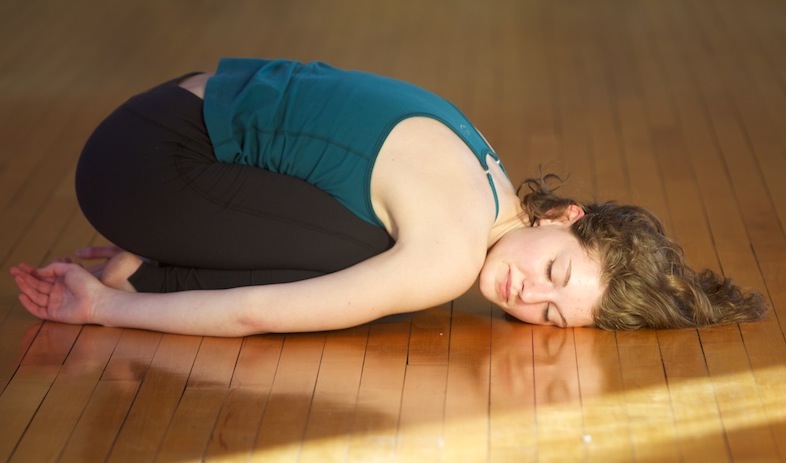
6dfba-anya_childs_copy


Yielding — A Prescription for Relieving our Perceived Sense of Isolation
In Embodyoga®, as in Body-Mind-Centering®, we consider yielding to be a primary movement of both consciousness and the physical body. Yield means to come into an active relationship with something, with anything, that we choose. It is a psychophysical expression of willingness and readiness to enter a relationship and the initial movement into it. Yielding is an active process of personal engagement and interest in our life. It is an act inspired by the creative force of intelligence and its desire to learn, relate, and make connections. The action of yield is supported by our inherent curiosity and desire to communicate and feel part of a whole. To yield is to enter the present moment with open awareness and curiosity.

It is important to differentiate what we mean by the term yield, and what we do not mean. Yielding can be misunderstood as the relinquishment of personal power or agency. This could not be further from our definition. Yielding is an inner expression of the readiness to relate.  It involves a quality of attention that happens in a clear state of mind when one is present and aware. The act of yielding opens us to a state from which we can give and receive. It is not about conscious thought, but instead it is about clear and present awareness within any relationship.

To yield does not mean to passively accept. It is not a process of giving up or surrendering to anything, or anyone. Yielding is never a relinquishing of our will, a disavowing of our strength, or an abdicating of our personal boundaries. On the contrary, from our perspective we would argue that the action of yielding to any situation makes us more effective in our actions, no matter what the quality of response required in any a given situation. Yield involves letting go of preconceptions and perceiving clearly. By yielding we place ourselves squarely in position to see what is actually happening in our environment and to determine who we are in relationship to people, things, and events.

Yielding is the most basic developmental movement and lies at the heart of our ability to receive support and comfort. It is a prerequisite to, and creates the environment for, bonding to take place. It underlies our initial bonding with our primary caretaker when we are babies and allows us to receive those first very important comforts of being held and supported. In yielding to this deep comfort, we process it through our whole body-mind. Over time, we learn that it is a reality that we can trust. Obviously, not every young baby receives the love and support that she deserves. This is sad, but it is important to note that even as adults we are still able to learn to yield and receive love and support. There is no expiration date on when we can learn to trust and refine our relationships. There is always time to learn and discover. Revisiting and exploring yielding and bonding can be helpful for many of us.

Yielding to a situation, person, or thing requires the simple process of recognizing what actually is. In recognizing what is, we enter into the present moment. This act of recognition makes us capable of responding to our environment appropriately and in a fully integrated way. It can happen in a nanosecond or can be a process of investigation and inquiry that takes place over an extended period of time.

We always have a choice about whether or not to yield to something. We also have choices about how fully to yield. Yielding, in the way that we are defining it, is the simple action of fully entering and engaging with the present moment no matter what decisions you ultimately make about how to respond. Yielding is not about the outcome; it is about the process.

Continue reading

Support Precedes Action–You Can’t do Anything Well Without Good Support

Anya_childs_copy

MOVING INTO WHOLENESS AND CONNECTION

 “When we don’t know where our support is coming from, the first thing we do is hold.” Bonnie Bainbridge Cohen

Support preceding action is a basic movement principle in Embodyoga®. We regularly refer to this in asana practice asking the question, “Where is your support coming from?” The question sets up an active inquiry within the body-mind movement and assures that we are relating to our environment, and at least looking for the tangible sensation of support for our moving bodies and ourselves.

The need for us to find support before we embark on physical or psychological movement has been thoroughly and beautifully explored and presented by Bonnie Bainbridge Cohen and Body-Mind Centering®. It is directly from my study with Bonnie that I have learned how important this inquiry is in our yoga practice.

We feel that the principle of support preceding all integrated and wholesome action is a primary basis upon which to develop optimally in our life. Feeling supported aids our growth on all levels: our physical expression, the development of a rich inner world, and our personal evolution.

The principle of support preceding action in Embodyoga® states that if we want to feel connected and integrated in our movement, we need to know where our support is coming from before we engage in any action at all. The fullness of even the smallest movement, like releasing our weight down and into the earth under us, is based on our knowing that we will be appropriately supported in that action. When we reach our arms out and upward in a sun salutation, we are using the support of earth under us, the receptivity of the space around us, our musculoskeletal supports, as well as our desire, and our state of mind. Support is a multifaceted and multilayered moving reality in body and mind. It is based on experience and our knowing that we can trust our experience.
Continue reading

Thoughts from Vieques — 2012

Day 2 – Wednesday

I found the water. I had forgotten. I was in it yesterday but I was just “in it”. Today I found it again. I live for this. Really. I submerge and exhale. Exhaling in the water is different because of the pressure. It slows my breath. The bubbles. The sensations. This water is perfect. Perfect temperature, perfect buoyancy, texture, and its movement is perfect. My comfort is almost unimaginable. Why? Don’t ask why. Fully supported in comfort. My breathing is like nowhere else. I can hold my breath effortlessly for tremendous lengths of time. Am I holding at the end of exhale, in the middle somewhere, both? It feels like a sidddhi that I have experienced before, in water like this. There is no question of breathing. It’s as if breathing is happening, but I am not taking in any air. It is a suspended state. Thinking doesn’t intrude on this state. I think, sure, but it doesn’t mean a thing. I am fully present in a primal state of equilibrium and ease. Support. I really do live for this.

Day 3 – Thursday

I got sunburned.
Discontent has given way to peace. Just peace.
Eat when I’m hungry. Sleep when I’m tired. 
Meditate all the time. The line between practice and not is just gone. How nice.

Day 4 — Friday

Falling in love again.
States of mind are so seductive. Even the so-called negative, the painful ones. Watching my mind be so happy to be relieved again. Watching my mind almost cling to it. Like trying to grab a single undulating cell. Its membrane simply slips from my grasp. This is perfect. I feel good. I am an experience junkie. My yogic life has been about a chasing of the good feelings. Trying to get away from the pain. There is no question about this. It is just true.

So I either grasp this undulating cell or I slip into the interstitial fluid and let the cell be itself. In the fluid I see all the cells and I float between them without resistance. At least for a moment. Grasping shows its face again. But I know better. There is no sustained release in any of the grasping. It just doesn’t work

Adyashanti calls it “check mate”. Check mate. Listen to this. The comments are the best part. Here is the link. It is a free download called “The Undefended Heart”.

Day 5 — Saturday

The goddess is found.
Was she waiting for me? I am not the goddess. She is the whisper of love inside me. She is the golden threads of healing. I feel the weave of her touch.
—not to say except to myself and to her.
I ask her if she wants to go swimming.
She does.
I ask her if I can go with her.
She says yes.
I laugh.
Gratitude.
(After all, we need to do some pranayama anyway and we both like to swim).

Still Day 5
Dying is not a problem.
The end of the weave of me.
I don’t mind.

Even this beach. Even Shri.
I don’t mind.

Love? Pain.

I honestly don’t think I feel love often enough to really miss it. Miss it. Miss the point.

With missing the point – dying is really not a problem. With getting the point – dying is not a problem.
So, dying is not a problem.

From pain I look forward to the culminating process of dying. An ultimate release into awareness and from suffering. I expect it will feel good.

From no pain, there is no loss – no gain.

It’s just not a problem.

Try This—Release your Aversion to Discontent

From Vieques—

Images

Unity
The philosophy of Unity is definitely comforting. Within the philosophy of Unity it is popular to extrapolate that everything is perfect just as it is. That may be so, but is it your experience? Is life perfect just as it is? Philosophically this is an extremely attractive idea. But I feel there are problems with accepting it when it is not your direct experience. Am I perfect? Maybe, but do I feel perfect? Not really. Perfection is not my ongoing and immediate experience.

Is perfection a quality inherently contained within Unity? Does perfection simply mean that nothing can be anything other than what it is? Clearly there is no floating standard out there that can be called “perfection” that everything is weighed against. It’s either all or nothing. Is this so-called perfection really just a statement of Unity? I think so.

It all comes back to the same thing over and over again: Recognition of Unity is the game. A feeling of lacking or imperfection is always the result of a perceived separation from the Vastness, the Unified Field, the Divine.

Ego Dominance
Our ego-mind is very good at creating a personal sense of imperfection. Ego likes to be in charge and loves to perceive itself as the ultimate reality. We may know philosophically that this is an illusion and that ego is just one of the many expressions of the Divine, but when we are caught in the dominance of our ego we feel separate and distinct from everything and everyone else. Not necessarily a bad thing, but not great for recognizing Unity. My perceived separation from Source makes me feel imperfect even if in some ultimate reality I am. So how useful is the philosophy of perfection and Unity if it is not my experience? Our sense of separation breeds the inner sense of imperfection that penetrates all levels of our experience.

We say that this perceived separation is a problem. But if we perceive it to be a problem aren’t we caught by it? Seeing it as a problem has an insidious effect of making us want to get away from something – away from the problem.

Ultimate philosophies are so attractive to the suffering body-mind. As I rest relax, swim, write, read, and bask in the perfect sea breezes, I am struck by the ongoingness of my resistance to life as it is. Yes, it is almost unimaginably beautiful here, and okay, you could just about call this beach perfect. But there is a mitigating factor here that is remarkably strong. It is me. It is my personal ego mind fighting it out with itself. This is no more than usual. It is usually doing this. But in the relative perfection of this amazing Caribbean beach my mind is just more noticeable.

Continue reading

Idealization, Yoga Movement Systems, and the Guru Problem

I think it’s safe to say that all of the major systems of Hatha Yoga in the west today have something of value to offer. There are excellent teachers from all traditions. And, as we know, there are also some incompetent yoga teachers from all traditions. Each one of the systems has specific tenets and principles that apply to their asana practice, but there is certainly no system of movement (asana practice) that will protect everyone and every joint in the body from injury.

No one system has all the answers, and to the degree that any system claims to be right, it is probably wrong a good deal of the time. It requires a fair amount of naiveté to accept that principles of movement or alignment that are useful in many instances are the be-all and end-all for organizing movement in all bodies. I think that the willingness to accept and hold too dearly a set of alignment principles in asana as right or true is symptomatic of an underlying need to find simple answers to life’s big questions. This tendency is idealistic without being grounded in the reality of how complicated and masterful the structure of the human body-mind system really is and that it may take years of study and practice to begin understand it.

Believing in an idealistic vision of asana that seeks to simplify and categorize human movement into a learnable code is problematic It involves thinking that there is an ultimate reality that applies in all situations and that this ultimate reality can be fully understood and then categorized by our human mind. This belief comes from a desire to see life as much simpler and more easily understood than it actually is.  If there is an ultimate reality  (which I actually still feel there is), one thing you can say about it is that we as individual spinning spheres of consciousness will not ever be able to grasp it fully. If our human form is made in the image of the Universal Vastness there’s a good chance that the individual ego, “I,” will not figure out how it functions. The best we can do is take the ride, all the while increasing our awareness as we notice more of life’s essence and beauty as well as everything else life offers us: pain, suffering, illness, and death. If we are wise, we may even be able to figure out how to assist our selves and others in finding greater comfort, ease, and stability along the way. And if we are serious in our practice, over a long period of time we may even be able to begin to glimpse the radiance of it all. We, as yoga teachers, are guides in this journey. We are not the owners of the vision—no one is.

Idealization—the kind that allows us to glorify, and even deify, a person or a yoga system—is a problem of naivete. If our yoga practice is working for us, we will mature and evolve beyond idealization of anything or anyone. This pretty much decimates excessive belief in a particular system and the impulse to idealize and therefore give over our personal power to another person, whether that person calls him or herself a guru or not. A guru is a guru based on how she or he acts and how people relate to her or him. If people give away their personal power to another person whom they put on a pedestal,, that person is seen as a guru. The label is not important, but the power dynamic is.

The guru problem and the yoga movement systems’ problems are ones that many serious yoga practitioners and teachers have had to grapple with over the years. Many of us, myself included, have tried to go down one version or another of these paths. As I explored, I found that the more answers any system of movement or philosophy claimed to have, the more suspension of higher judgment a devoted follower needed to adopt.

When I was a young practitioner, I hoped that by attaining perfect alignment and mastery of yoga asana, I would also attain a perfect body and a radiant mind. Additionally, I hoped that I might meet the guru person who could show me the way to enlightenment. Personally, in terms of asana, I decided that I would complete them all—literally check every posture off my list. It took a while, and as I neared completion—and didn’t feel that enlightenment was about to fall onto me—I began to see there might be a problem in my thinking. Fortunately for me, I could never adhere to a specific system so I did have the advantage of not having any authority to rebel against and no system to leave. One of my early and most influential asana teachers, Ana Forrest, used to tell the story of going into Iyengar’s class in Pune with a sticker on her hip that read, “Question Authority.” That message was clear and made a strong point that I never forgot in my personal journey. In terms of philosophy and meditation, I have been lucky to have never found any one person who seemed to hold all the answers, and the best teachers along the way never pretended to. Those are the teachers from whom I have learned the most.

I believe that these two issues, believing too much in a system of movement and believing too much in a single person’s authority, are not separate. I think that the source of both ways of thinking can be found in a fragmentary vision of reality in which we perceive the world, our bodies, and ourselves to be composed of a collection of discreet and individual parts. This usually incorporates a hierarchical vision of life that positions some things as binaries: bad/worse, good/better, and not-so-smart/smart. Usually, we don’t like the bad parts of our lives, so we try to annihilate the bad and maintain the good. Unfortunately, this just doesn’t work. You will never be all good and neither will anyone else.

Obviously, the idealization of a guru has many potential pitfalls. From the perspective of a fragmentary mind, the guru knows more than I do, and I need to defer my knowledge to him/her in order to “better myself” or perhaps to “rise” to his/her level. We aggrandize this person until eventually, in order to  “progress,” or to be free of the guru’s influence, we need to knock the guru down, which is easy to do, because in fact, the guru was never any better than we. But since we are still stuck in the better-worse dichotomy, we now see the guru as “worse.” There is no end to this game, and it holds no spiritual development for anyone along the way.

When we are watching someone who we have placed in a high position on this contrived scale of good to bad take a fall, our tendency is to vilify that person because we are so stuck within ourselves in the good/bad dichotomy. The idealized person, now taking the fall, is also clearly stuck in the good/bad dialogue. Otherwise, she would never have allowed herself to be put on the pedestal in the first place.

The guru is not better or worse than we. This person has not suddenly been revealed to be “bad.” He is just like me and just like you, and without an expanding vision that is a pretty difficult position to hold because that would make you and me bad too. To break out of this thinking, I need to go deeply inside myself and see that I too am good/bad and everything else in between, all the time. That is not such a comfortable realization for a person who tends to idealize anything! To the degree that I put my guru down, I am limiting the opportunity to go deeper within myself and accept more of my own humanity with all of its so-called faults.

The problem of idealizing the teacher as a guru is one that many serious yoga students will have to address. Because yoga is a spiritual practice, the tendency to idealize the teacher and to believe the teacher has great knowledge or power is strong. As yoga students who are also yoga teachers, we have the responsibility of not allowing ourselves to be placed in the position of a revered guru. We need to be mindful of our role in this power dynamic. This pattern of idealization will happen again. It will, because we inhabit an imperfectly perfect universe. Accept it. We all have a tremendous responsibility to do the best we can to act with integrity. It is  key to a deep practice. In order to really act with integrity, you need to accept all aspects of yourself. Without accepting the unwholesome aspects of yourself as well as the more desirable qualities, you may find that you act on them before you even notice what you are doing.. By accepting all of the aspects of yourself and airing them in the clear light of consciousness, you gain real choice and thereby you can make good choices. Denial of the unsavory corners of our psyche does not free us of them.

Thoracic Diaphragm and its Stem

Diaphragm_openings

The thoracic (breathing) diaphragm is a broad, thin, double domed muscle with insertions around the circumference of the lower rib cage, the spine, and the lower portion of the sternum. It spans the thoraco-abdominal cavity and contains a strong central tendon, the left and right parts of which insert into one another. The thoracic diaphragm is the main muscle of the breath, and it is said that its movement is responsible for 75% of the respiratory airflow. The accessory breathing muscles are responsible for the additional 25%.

The diaphragm separates the heart and lungs above from the abdominal organs below. The heart rests on the central tendon and is connected to it by the pericardium. The heart rises and falls with the movement of the diaphragm, as do the lungs. The diaphragm is the seat of the heart and lungs. It massages, rolls, and squeezes the abdominal organs as it moves. This movement contributes to health and suppleness in the organs as they are bathed in fresh blood and fluids.

An under-recognized and under used aspect of the diaphragm is its muscular stem. The stem, or crura, is widely considered to connect only about as far as the third lumbar vertebra; however, in Embodyoga® and Body-Mind-Centering® we have found that in full use, the support of the stem can be felt all the way to the coccyx. We feel it is important to develop the use of the diaphragm all the way to the tail because we consider it to be the primary muscular support of the lumbar spine. The stem of the breathing diaphragm blends with the anterior longitudinal ligament along the front of the spine. The effect of this muscular and ligamentous support along the front of the spine through the lumbar region is absolutely critical to full integration of upper and lower body in asana. Without the use of this strong vertical support there is often a break in the pranic flow from head-to- tail and tail-to-head. This effects our experience of “integration and unity” in the posture and compromises the integrity of the spine in the bargain. Continue reading

Yoga Teachers—Time to Take Off Our Masks

A response to the New York Times article of January 5, 2012 – “How Yoga Can Wreck Your Body” by William J. Broad

What a wonderful opportunity this discussion has been for yoga in the west!  

  For the most part I agree with this article.  It’s unfortunate that part of its aim seems to be sensationalism and the statistics quoted are incomplete at best. But, let’s face it– those of us in charge, yoga teachers, have been perpetuating a false notion of yoga ever since this wave began in the early eighties. The simple fact that one can get hurt doing yoga doesn’t even get to the source of the problem. The deeper problem is that yoga teachers have been purposely obfuscating the truth about yoga in order to serve their own personal ego needs.

 Unfortunately, most yoga teachers have bought into a hierarchical way of looking at yoga study and teaching that puts a person on top – the guru – and everyone else below. This is a dangerous structure and it requires a lot of people to buy into it in order for it to work. In order for it to work there has to be an agreement that someone essentially holds the power. In the yoga world this is really insidious because the person holding the power is supposedly the most “spiritual”, as well. That is an extremely seductive proposition for someone considering becoming a yoga teacher! By becoming a yoga teacher we can take care of our own insecurities by rising to the top dog position – not just top dog, but top spiritual dog! Part of maintaining this hierarchical structure that keeps the teacher on top is making sure that the students don’t start to think they are as good as the teacher! 

Once you have a position of power it is very difficult to give it up. If you want someone to think of you as in some way better than they are, you will have to lie to them – simple as that. And the secret of many yoga teachers is that they feel this need. They feel the need to pretend to be “better” then they think they actually are. It is not that they are really not good enough. I will argue that they are good enough. The problem is that they don’t believe it, and they feel a need to present themselves dishonestly.  Continue reading

The Three Pillars of Practice — Inquiry, Acceptance, and Discrimination

INQUIRY — Embodied-Inquiry™ is an intimate exploration of all layers of our form and consciousness, through the body’s systems to the cellular, sub-cellular, pranic levels and all the way to the Core of Awareness itself.

CONTENTMENT — Santosha is the wholehearted acceptance of and contentment with What Is – without inferring non-action. True self-acceptance lays the groundwork for personal evolution by freeing us up to make choices about how we perceive ourselves and our place in the world.

DISCRIMINATION —Viveka is the penetrating practice of discrimination. It hones and refines our consciousness, protecting us from the perils of self-deceit.

Yielding to What Is — by Abigail Clarke

To be alive is to be in relationship.
Each of us is in relationship with other people, the environment, our surroundings, and with our self.  Our bodies are the complex result of trillions of relationships among individual cells.  Before we were born we were in relationship with the earth, feeling gravity and its pull.  The sciences—biology, ecology, psychology, sociology, etc—are the study of relationship, how one thing relates to and effects something else. 

Yoga is an invitation to embody the exploration of relationship.  While being in relationship is a natural part of being alive, the quality of our engagement is a choice.  We can choose to be passive, allowing the world to float by.  We can choose to be forceful, using the strength of our will to create or move toward what we desire. Tantra teaches that true Yoga exists between these extremes, not a passive collapse or a forceful effort, but the yield that underlies all movement. 

Continue reading

What Does Anatomy Have to Do with Yoga? — Part 2

Meditation on Hands

The body doesn’t think the same way as the mind. Every cell is awake, intelligent, and self-aware – but not involved in discursive thought. Perfect for meditating upon! Let’s take a very simple Embodied-Inquiry™

Take the thinking mind off the hook for a moment. Sit comfortably and feel your hand. Look at it. What do you see? It has weight, density, temperature, color, texture, etc. How do you experience this? Look carefully and you will notice that you experience many things more than just the most obvious characteristics of your hand. You see a certain kind of liveliness. You notice the suppleness of differing textures, the firmness of the bones, and the fluidity and warmth of the bone marrow. With your inner sense of touch you feel the blood flow and the vibration of the nervous system. You may notice the sensation of spaces between the layers of the tissues. You feel the spaces between the cells.  You feel the tissues touching one another. You “intuit” a coordination of function. Continue reading

What Does Anatomy Have to Do with Yoga? — Part 1

Tantra and Hatha Yoga recognize the universe to be a single unified field of vibrating and undulating intelligent-life-force. The Unity philosophy says that all of nature’s manifestation – from the tiniest to the unimaginably large – is an expression of vibrating energy, and that vibrating energy is inherently conscious, intelligent, and aware.


The field of form and relativity, according to Tantra, is nothing more or less than this vast sea of creative intelligence manifesting into nature, under its own motivation, through itself and its elements — earth, water, fire, air, and space; one seamless undulating sea of undifferentiated and differentiated awareness, vibrating at varying densities, with changing, rising, and falling characteristics and traits, giving rise to a nearly unimaginable variety of creative expression. Continue reading

Mesentery and Gut-Intelligence

Sensing and Feeling in the Mesentery
In our human vertebral and esoteric yogaic anatomy Manipura Chakra is the fire center. The central manipura is just behind the belly button and relates to the digestive tract and the layers of consciousness concerned with thinking, making sense of life as it is, digesting our experiences and assimilating them – or not. We have always considered the small intestinal tract to be a key in the inquiry into the expression of manipura chakra – who we perceive ourselves to be in the world.

Our mesenteries are soft tissue fascial structures woven through with vessels, fat, blood and lymph vessels, and of course, the enteric nervous system. They are complex hubs of developmental and structural support, and provide a home to intricacies of gut-intelligence. They are alive within, waving in their fluid world of the abdomen like glorious sea creatures. They explore and communicate our gut feelings with the body-mind as a whole.

Tree_fungus_cropped

This tree fungus resembles our mesentery in its shape. The thick folds of tissue are attached to the tree as their as their waving tissues search outward into the environment.

The fascial and fluid nature of the mesentery makes it an especially important structure in relationship organizing movement around our navels in yoga.

Fishingbeingeatenbyastarfish

Starfish Eating

I feel the mesentery holds a deep understanding of who we are within our navel cores. In embodiment it opens a window into the weave of our fluid underpinnings and our human experience of “gut” reality—safety, comfort, and nurturance at its most primal level. Or many times, the opposite—fear, discomfort, confusion, and misperception.

Embodying the mesentery and exploring its form and consciousness can be real window into the integration of body and mind at the navel. Very primal. If we choose, we can learn to accept ourselves as we are. These deeply fluid navel folds can provide soothing comfort when learn to release the grip and fear that we may hold in our guts. When acknowledged and allowed, we can experience our mesentery’s true fluid and undulating self. We can find them as perceptive and relational partners to the whole of our structure and consciousness. We can journey inward and assist this process through gentle, movement, breathing…and of course, self-acceptance.

Explore the mesentery in movement, breathing, and embodied anatomy in my video library.
https://www.embodyoga.com/videos
Let me know what you feel.

7 • Permeating Consciousness

Horizontal_karen_par

Principle of Permeating Consciousness

 
This is the process of directing and diffusing awareness through all facets of body and mind. From the known we proceed deeper, transforming the unknown into the known though our inquiry, invariably arriving at the Unified Source – Creative Intelligence. Continue reading

6 • Balance, Stability, Mobility

Alisa_horizontal

Balance, Stability and Mobility Throughout the Body

Each individual has a unique balance of support and flexibility that facilitates his or her maximum integration and healthy movement. Continue reading

5 • Support Precedes Action

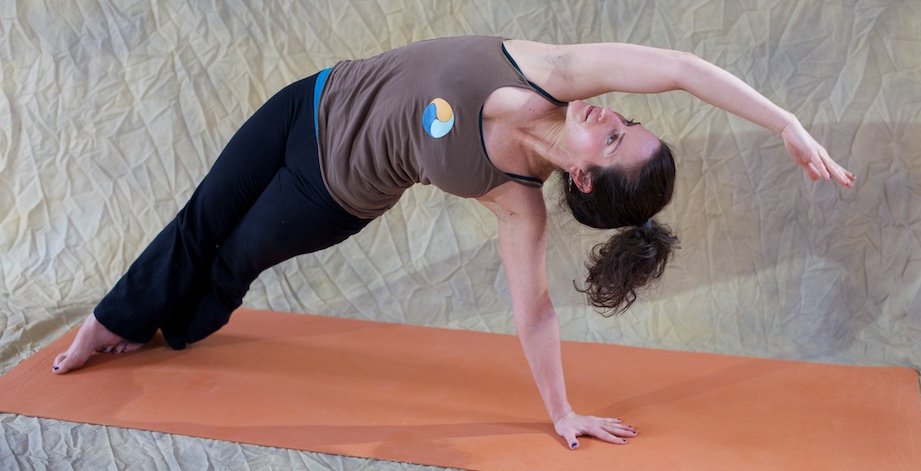
Patty_into_parsva_1

Support Precedes Action — Stability Precedes Flexibility

“When we don’t know where our support is coming from, the first thing we do is hold.”
– Bonnie Bainbridge Cohen

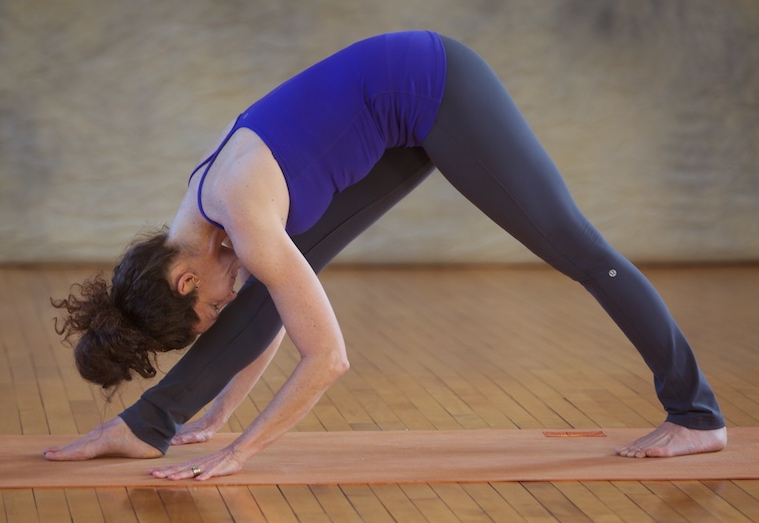
When approaching an asana we must engage our supports before we begin to move into the posture. The supports develop continuously and seamlessly as we move into the posture. Supports are motivational, developmental, and structural. Continue reading

3 • Contained Body Principle

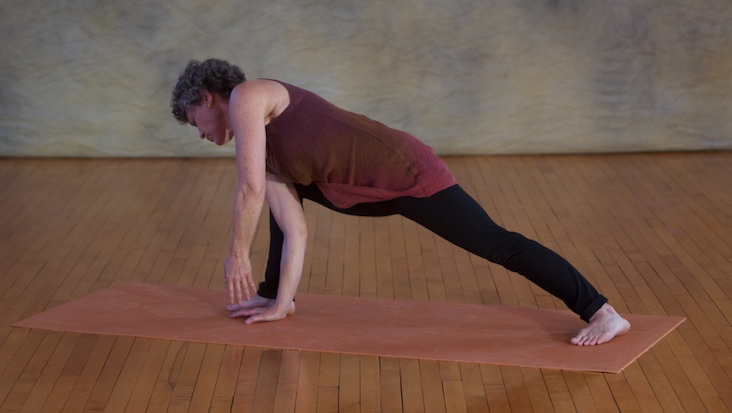
Patty_chatturanga

Contained Body Principle | Principle of Whole-Body Integration

“A yogi is a person whose prana is maintained inside the body.” – Krishnamacharya

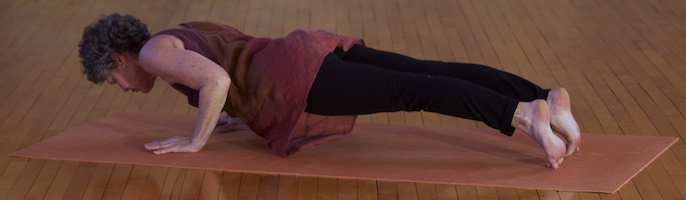
Prana is life-force. Its vibration and movements are deep support for everything that we do as human beings. Our prana is precious and should be respected and preserved. As a self-study, hatha yoga is the study of prana. It is prana that supports our every breath, thought, feeling, and action. As yogis we should be serious about the maintenance of prana inside our bodies. Without good prana there is no life force with which to inquire deeply or to be effective in the world. Continue reading

2 • All Movement is Relational

Patty_and_anya_play_standing

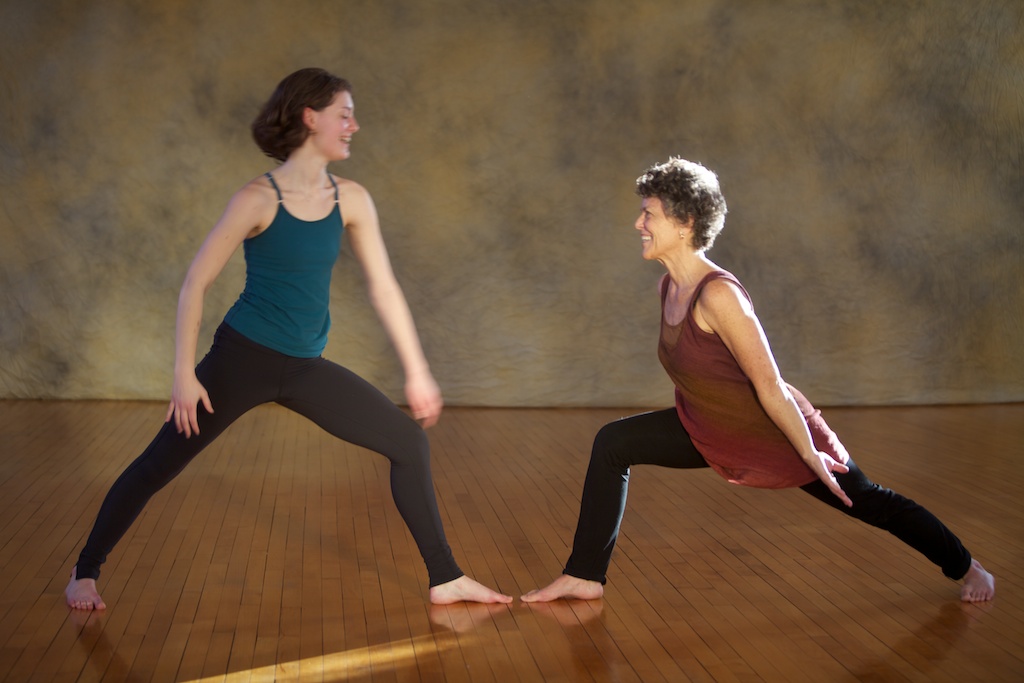
We are alive within the field of relativity; everything we do is in relationship to ourselves and to our environment. All movement is an expression of our individual consciousness.

Many psychological difficulties arise from feeling isolated within oneself. Yoga practice invites us back into the present moment by reminding us of the immediacy of our connection with the simplest aspects of environment: the earth, gravity, our breath, the mat, etc. Continue reading

First Principle of Embodyoga® • Maintain a Calm and Mobile Spine

Karen_parsvot

In hatha yoga spine is the central structure for defining self and core. 

In embodyoga® we purposefully heighten and increase our personal awareness of spine as an integrated structure that supports our experience of unity and integration at our core.

In our practice we are invited to experience all levels and layers of spine including its subtle aspects: empty radiance, clarity, and peacefulness.

Calm and mobile spine supports recognition of the undisturbed core that is at the heart of the experience of wholeness in body-mind-awareness.

A calm spine does not mean that spine doesn’t move! It moves in every possible direction and combination of directions. But no matter what direction or combination of directions it is moving the forces will always flow along the axis of the weight bearing bodies of the vertebrae (head-to-tail and or tail-to-head.

In fact, a spine that is integrated in movement along its axis becomes much more flexible than a spine that has been dealing with fragmentary sheering forces.

In a fragmented spine the soft tissues harden and dry due to the excessive work they are enlisted to perform in an effort to stabilize the spinal joints and direct the forces in a more healthful manner.

But spine needs to move in a way that it continues to experience and recognize itself to be a unified structure from head to tail and tail to head. 

When there is fragmentation in the spine, the sense of fragmentation can be felt at the core of individual awareness.

The quite spine principle is at the heart of the experience of wholeness in body and mind. It is primary for replacing the habitually fragmentary vision of self with one of unity and integration.

By remaining calm within our core a deep abiding unity can be felt along this crucial central channel of our existence. We are unencumbered by fragmentary ways of thinking and become more able to adapt, respond and move freely in our lives. Discovering this calm core is primary for replacing the habitually fragmentary vision of self with one of unity and integration.

  • Spine is our primary structural template for “center” and for the “I” concept.
  •  Weight and movement forces must flow through the weight bearing bodies of the vertebrae and the inter-vertebral disks without sheering forces across or off the spine at any point.
  •  When we maintain a quiet spine our central nervous, subtle nervous system, and sense-of-self remain undisturbed.


Santosha and Viveka—Contentment and Piercing Discrimination

Corinne_badha_konasana

Santosha is contentment with what is, without inferring non-action. Viveka is discrimination. Wise asana practice is infused with keen discrimination and tempered by radical and abiding self-acceptance.

Self-acceptance is an absolute prerequisite for useful practice. Without self-acceptance we are always in a battle with ourselves trying to change or perfect one of our imagined limitations. This is a battle that is never won because as soon as we perfect one thing we are on to the next to try to alter, change or improve another aspect of ourselves. The radical idea that you are just fine as you are is almost unthinkable to us. Continue reading