Mesentery and Gut-Intelligence

Revised from a 2011 post. (Patty Townsend)

Embodyoga®

Sensing and Feeling in the Mesentery
In our human vertebral and esoteric yogaic anatomy Manipura Chakra is the fire center. The central manipura is just behind the belly button and relates to the digestive tract and the layers of consiousness concerned with thinking, making sense of life as it is, digesting our experiences and assimilating them – or not. We have always considered the small intestinal tract to be a key in the inquiry into the expression of manipura chakra – who we perceive ourselves to be in the world.

Our mesenteries are complex hubs of developmental and structural support. They are soft tissue fascial structures woven through with vessels, fat, blood and lymph vessels, and of course, the enteric nervous system. Our mesenteries are home to gut-intelligence. They are alive within, waving in their fluid world of the abdomen like glorious sea creatures. They explore and communicate our gut…

View original post 182 more words

Subtle Pathway of Breath — Nasal Conchae

Let’s delve in a little deeper to find the soothing and enlivening qualities of the subtle breath. It’s easy. We just need to know how. The turbinates – bones – right inside our nasal pathways are key to finding real delight in breathing.

Nasal Breathing

Before our breath gets to the throat where we make the humming ujjayi sound, our breath has already gone through an intricate pathway of touching, offering, and receiving life force. We know we are supposed to breath through our noses, but do we know the complex beauty and significance of that process? The nasal conchae, the nasopharynx, the soft palate are some of the places of touch along the pathway of breath. Our breath is not just flowing, it is touching, and its touch stimulates response.

The Nasal Conchae 

There are both subtle and anatomical reasons to choose nose breathing over mouth breathing. First, from the western anatomical perspective, when we breathe in though our nostrils the air is warmed, cleansed, and moistened by the tissues within our nasal pathways. This is good.

Additionally, in the yogic sense of things we know that these deep nasal tissues are also highly sensitized prana receptors. When we skip the nasal pathways, by deferring to a mouth breath we miss the chance for the subtle touch of breath to be experienced. Through yogic breathing we can experience the inner touch of breath in the nasal pathways to stimulate all the way through the physical and subtle bodies.

The bones of our heads are transparent to the touch of the breath.

As our breath enters our nostrils it is met with soft mucus membranes that warm and cleanse. Just inside the walls of your nose are six spiralic bones called the conchae. The shape of the bones resembles the shape of a conch shell, hence their name. There are three on each side. The conchae increase the surface area of the nasal cavities. As the air enters it pass through these mucus covered spiralic walls. The inhaling and exhaling breaths touch the walls of the conchae and spin as they flow in and out.

As the breath spins it touches subtle energy receptors imbedded within the mucous membranes. A delicate and silent application of ujjayi can slow the pathway of breath through the conchae making the touch of sensitive tissues more thorough. 

Each side has three conchae: an upper, a middle, and a lower. The breath moving along and through the conchae provides specific sensations according to where it is passing. 

  • Lower Concha: The touch of breath in the lowest conchae on both sides stimulates the lower portion of the face—down toward the corners of the mouth—and the lower body’s subtle nervous system. 
  • Middle Concha: The middle stimulates across the face toward the jaw joints and stimulates sensitivity in the subtle centers of the mid body. 
  • Upper Concha: The upper stimulates  toward the inner corners of the eyes and the third eye point. It relates to the upper body and the upper subtle energy centers.

A full nasal breath includes the touch of air through the full range of the conchae on both sides. The conchae can be explored individually as well. Each can be correlated with the upper, mid, and lower portions of the lungs on each side. Sometimes we feel the upper conchae and the upper body, the middle conchae and the central body, the lower conchae and the lower body. We also use them as a specific touch in alternate nostril breathing.

The Nasopharynx and Soft Palate

The breath-full journey continues. Next the breath then enters the nasopharynx, the upper part of the throat associated with the nasal region. It is back behind the conchae and above the soft palate. The breath touches the soft palate as it continues down through the back cave of the mouth, touching all the way under the tongue on its journey down the throat, the lower pharyngeal region, and finding its way to the trachea and into the lungs. The entire pathway is composed of sensitive energetic tissues, all transparent and receptive to the touch of breath.

These inquiries into the subtle aspects of breath are tools for sensitizing ourselves to the nature of life-force.

1. Finding The Inner Conchae
Use a light touch on the skin of your face to help sensitize the individual conchae.
Fanning out from the corners of your lower nostrils, imagining your touch is in the shape of kitty cat whiskers.
Lower concha — downward toward the corners of your mouth
Middle concha — sideways along the under side of the cheek bones
Upper concha — upward toward the outer corners of your eyes

2. Explore Breathing in Individual Conchae
Lower Concha: Feel the breath move through the lowest portion of your nasal pathways. 

Middle Concha: “Feel the touch of the breath in the mid conches and through the face and head toward the cheek bones. 

Upper Concha: “Move your fingers to touch the skin upward toward the corners of the eyes. Feel the breath in the upper conchas and how it spreads upward to the corners of the eyes and to the third eye point.” 

3. Blending the breath evenly in all three conchae.

4. Explore coordinating conchae breathing with the three aspects of lungs on each side: lower, middle, and upper.

5. Explore coordinating conchae breathing with the lower, middle and upper energetic centers and body regions.

6. Add concha awareness to alternate nostril breathing.

7. Add sensation of breath touching alternate sides of body in alternate nostril breathing

Inhale left side conchae and left side body
Exhale, releasing breath to right side
Inhale right side conch and right side body
Exhale, releasing breath to left side

Prana moves, we breath, and so it goes…

We are in this Together
We are not alone. We all breathe. Each of us absorbs life in an individual way. How often do we pay close attention to what is happening inside? For the most part breathing is automatic, guided by who we are, what we are doing, and how we feel about it. It keeps us alive. Not only alive, but our breathing holds secrets to our inner sense of self. Our breathing patterns interface with our nervous systems, our minds, and bodies. What we breathe becomes us. We take life’s breath into ourselves through every cell in our bodies and every cell responds.

Relationality
With each breath we are seamlessly relating with the entire planet. As we inhale, we receive elements, nurturance, and inner touch from the environment in which we live. We receive the gift of life. We offer our gifts back into the world as we exhale. The life-giving breath we take in transforms and supports us. We feel it. We release it back out, and then we do it again. We do it over and over, for the entire time we exist in a body.

Intimacy and Desire
Breathing is a profoundly intimate act. Desire drives every breath we take. From our first breath to our last, we want and we need it. We literally cannot live without it. We share the intensity of this desire with all life on the planet. We are constantly in direct communication internally and externally with everyone and every thing that is also breathing. Every nook and cranny, every cell knows breath and is in a continuous dance with the inner and outer environments. What and how we breathe becomes us. 

Prana
Usually simply thought of as life-force and considered to be synonymous with “breath”, prana is life. Everything that is alive is suffused with and supported by prana. It is vitality, radiance and movement.

Breathing is so much more than simply taking air in and out of our lungs. Even thinking about breath that way is limiting to the capacity for prana—true breath—to spread. 

Prana animates the entire world. It moves through the body, riding on the air we breathe, penetrating every cell, enlivening us on inhale, and releasing and relaxing us on exhale.  Our prana is our personal gift of life.

Prana gives rise to the breath. It is the subtle breath. It underlies all aspects of what we call breathing. Our breathing processes provide the vehicle for prana to spread through every aspect of our embodied form. Our deepest breath is the movement of prana within our cells. It is the subtle aspect of energetic-awake-liveliness that we feel within.

Prana regulates all internal functions and maintains inner balance the best it can within varying circumstances. When we are healthy and happy prana wafts and weaves through the whole body in easeful support of everything we do. When we are stressed—which is often—we automatically harden and resist. In our resistance we restrict prana’s flow. We harden to protect ourselves. Or we collapse and give up

We must go deeper. There are tools for managing these internal processes. We do have some control over the breath. We can take skillful means and a soft inner touch to modulate and regulate our breathing and therefore—how we perceive, think, feel, and act in the world

Breathing and Pranayama
The trick, of course as always, is finding the most skillful way to both soothe and enliven the nervous system/body and mind. We want to feel safe inside so we can appropriately relax. And we want to feel clear, alert and comfortable at the same time.

Yoga’s breathing practices—pranayama—offer critical tools for creating the balanced ease and comfort we are looking for. Skillful pranayama forms the foundation for developing true clarity in body and mind. Refining our breathing processes forms the sound foundation for serious yogic inquiry. Pranayama is not an isolated technique.

As always, nothing exists without relationship and context. Nothing acts alone. Pranayama becomes effective when practiced within yoga’s full context laid out in the eight limbs of Patanjali’s yoga sutra.

Breath is delicate. We need to commit to sharpening and refining our perceptions to to alter our breath. We need to take a soft touch and remain responsive to what is actually presenting as we use the breath to journey inward. Think of your breathing as a fine excavating tool. Sometimes a large drill may be necessary, but it must be used with care. Harshness in the practice will not be helpful. It can be counterproductive and inhibit the excavation process.

However, even the techniques that one may think of as “harsh” can be done from a soft touch. A soft inner touch is necessary for pranayama to reveal the inner layers of self. The inner depths, the layers of core and radiance are NOT harsh. To enter the inner world we need tools that can match the inner tone of our being—spaciousness and radiance is always there.

Any of the basic techniques can help, when done skillfully. And they can all compromise the nervous system when not done skillfully.

Skillful Practice of Ujjayi Breathing in Asana

With every breath we take we renew our relationship to life itself.

We give and take, we offer back, and receive again.

What does it mean to take breath into oneself?

Can we simply allow ourselves to receive…life as it is?

To wait for it?

To invite, not pull?

Can you absorb, relish, and offer back?

Is there love in this?


Breathing is a Profoundly Intimate Act
Ujjayi breathing in asana is a way to cultivate a more conscious and intentional intimacy with life. Ujjayi breathing can be one of our most powerful breaths for nervous system balancing. When practiced skillfully, ujjayi is soothing to body and mind. It can be a direct pathway to stimulating parasympathetic nervous system and relieving us from sympathetic nervous system agitation and dominance.

When done in a forceful manner ujjayi breathing can be disruptive to the nervous system. Any harshness in the breath will have the opposite of the desired effect. Pushing or driving the breath stimulates the sympathetic rather than parasympathetic nervous system. Forcing our breath creates dis-ease rather than increased ease in body and mind.

Skillful Practice of Ujjayi
When skillfully practiced, ujjayi can be deeply nourishing and soothing. In asana, it builds soft deep strength and washes the inner world as we move rhythmically with its sound and inner feeling.

We begin with a light touch—never harsh, always rejuvenating and genuinely delightful. As we continue, we remain responsive to the actual needs of the body in movement, rather than to an idea of how the breath should be. 

Breathing arises from stillness. The stillness creates the movement. So we wait. We wait for the breath and begin. Remaining responsive and receptive—not driving or doing the breath—we follow, move and breath as an integrated undulating whole.

Initially we slow down so we can feel breath’s touch in our in the nasal pathways. We sip and relish the breath. We train our attention to feel the prana as it naturally spreads through the subtle energy receptors of the head, through the soft palate, the throat and all the way to the cave of the back heart.  

We nurture this soft sipping by delicately narrowing the region of the glottis and the vocal cords. This slight narrowing regulates how fast breath moves in response to the diaphragmatic movement below. Throat and diaphragm work together to adjust the breath’s pace and to encourage prana to circulate more completely though the entire region, all the way to the back heart.

There is no hurry in this. Calm and steady breathing and calm and steady nervous system go together. Even in vigorous asana, the rhythm of ujjayi should be even and smooth.

When practiced well, ujjayi breathing forms the foundation for effortless asana practice. When breathing is effortful, asana is harsh. When our movements are abrupt or rough, our breath is equally so. The two always go together. One always affects the other. For most successful practice it is best to attend to them both.

Mulabandha—Choosing Engagement

Mulabandha is a Call to Action—A Commitment to Embodied Existence.

Choosing engagement,
mulabandha expresses
commitment.

Saying yes to life.
An action, a coalescing
around our purpose –
our dharma.

See it with new eyes.
Cultivate reverence,
bow to the universal.

Collect around your perineal root.
Pulse upward
to the central pit
of your pelvic belly.

There, take responsibility
for your life—
embrace the key to deeper vision.

First things first.
Accept your form,
your dharma,
your foibles, and
the power of your aspiration.

Okay, now you are ready to practice.

Find Resilience in Breath—Explore the Inward Journey

Breath is precious. It should be our birthright to experience the gift of life offered with every breath we take. We know this is not always the case. Even in the privileged lives so many of us live, full-body easy breathing is not guaranteed and is not automatic.

We are living in stressful times and these troubled times affect our breath. In turn, our breathing affects everything about how we feel and our ability to be effective in our lives. In this time we are called upon to act with strength and clarity within ourselves and in our communities. We are called upon to take strong action, to be persistent, and to come from a place of balance and equanimity. Equanimity and balance are functions of complex interactions within our nervous systems. How we breathe affects our nervous system, and our nervous system affects our breathing.

Support Precedes Action
The quality of our own breathing is critical to finding the stability within our lives that is imperative for providing support for all we need to do. Good support precedes effective action. Yogic breathing techniques offer extensive means for balancing and toning the nervous system. We need that to experience inner comfort and stability. We need stability to create the foundation for strength and clarity in our actions.

There is an art to yoga breathing. Like everything else in yoga, pranayama is a multilayered process. Pranayama requires a delicate touch, skillful technique, and appropriate progression of practices.

What does Deep Breathing Mean?

In Embodyoga we explore layer upon layer of prana and breath. Hatha Yoga techniques along with important embodied-somatic underpinnings for those techniques are key tools for our practice. We use Embodied-Inquiry to delve into subtle layers consciousness and form. We open to direct experience of prana in all its layers of subtlety and power. At the same time, we use the pranayama techniques in their optimal way to heal and transform our agitated nervous systems.

We explore traditional pranayama techniques:

  • Three-Part Breathing—with a radically new perspective on diaphragmatic movement
  • Ujjayi
  • Bandhas
  • Breath Retention
  • Nadi Shodhana

We explore inner foundational techniques:

  • Cellular Breathing
  • Navel Flooding Breath
  • Infinity Breathing

Cellular Breathing was our first and remains our primary breath. We were breathing cellularly for nine months before we ever took a breath into our lungs. We feel the life of breath in our cells. In Cellular Breathing, we are invited within to our own sea of embodied intelligence—the place of liveliness and potentiality that each of us carries within. It underlies all breathing.

Navel Flooding Breath is a completely new way of looking at “abdominal breathing”. Nearly opposite of what you may have learned, Navel Flooding Breath is profoundly toning to abdominal organs and other soft tissues. It is supportive of life force containment and is foundational to going deeper in pranayama.

Infinity Breathing—the culminating gift of pranayama is not really a technique at all. It can be said to be the result of good technique. It rises out of deep ease and comfort within. Inhale and exhale diffuse one into the other—expanding, condensing, and yielding—dissolving only to rise again. No beginning and no end—the undulating gift of life with each and every breath we take.

“Pranayama removes the veil covering the light of knowledge
and heralds the dawn of wisdom.” B.K.S. Iyengar—Light on the Yoga Sutras, Sutra II.52

This internally embodied approach is effective and for all yoga practitioners.
Those with a basic knowledge of yoga and a desire to go deeper will receive foundational understanding upon which to build a lifelong breathing practice.

Teachers and advanced practitioners will learn new practices. Knowledgeable practitioners will recognize the importance of embodying the underlying breathing techniques offered here as critical support for all pranayama practice.

We incorporate western science, yogic science, and respect for the individual practioner to explore their own experience of the subtle levels of their being.

Our progressive and holistic approach to pranayama respects our embodied existence. We aim to deepen our humanity, sensitizing ourselves to life while providing the inner strength and resources to see life as it is, engage in appropriate ways, and increase self-knowledge and love.

Yoga is serious stuff. It isn’t necessarily easy to stay on track. A good deal of commitment and personal agency is required to continue to go deeper. I hope you will join me on this continuing journey.

Very much worth the effort…

Feel free to contact me with questions: patty@embodyoga.com
Let’s explore together, through reading, instructional videos and if you like, personal consultations.

Breathing the Organ Body

Breathing is key to yoga practice. There are many effective methods for using breath for different purposes in our yoga practice. In Embodyoga® we have been exploring a variation on yogic breathing that we call Navel Flooding Breath. Navel Flooding Breath is not specifically a chest breath or a belly breath. Navel flooding is a technique that encourages the prana of the breath to enter through, and deeply into, all the organs of the torso, including the mid, lower, and upper navel, and into the chest. It is a breath that is initially directed to the tissues behind the belly organs and is allowed to spread through all of the soft tissues: organs, fascia, vessels, and glands. In this way we allow the prana of our breath to move effortlessly into the entire torso.

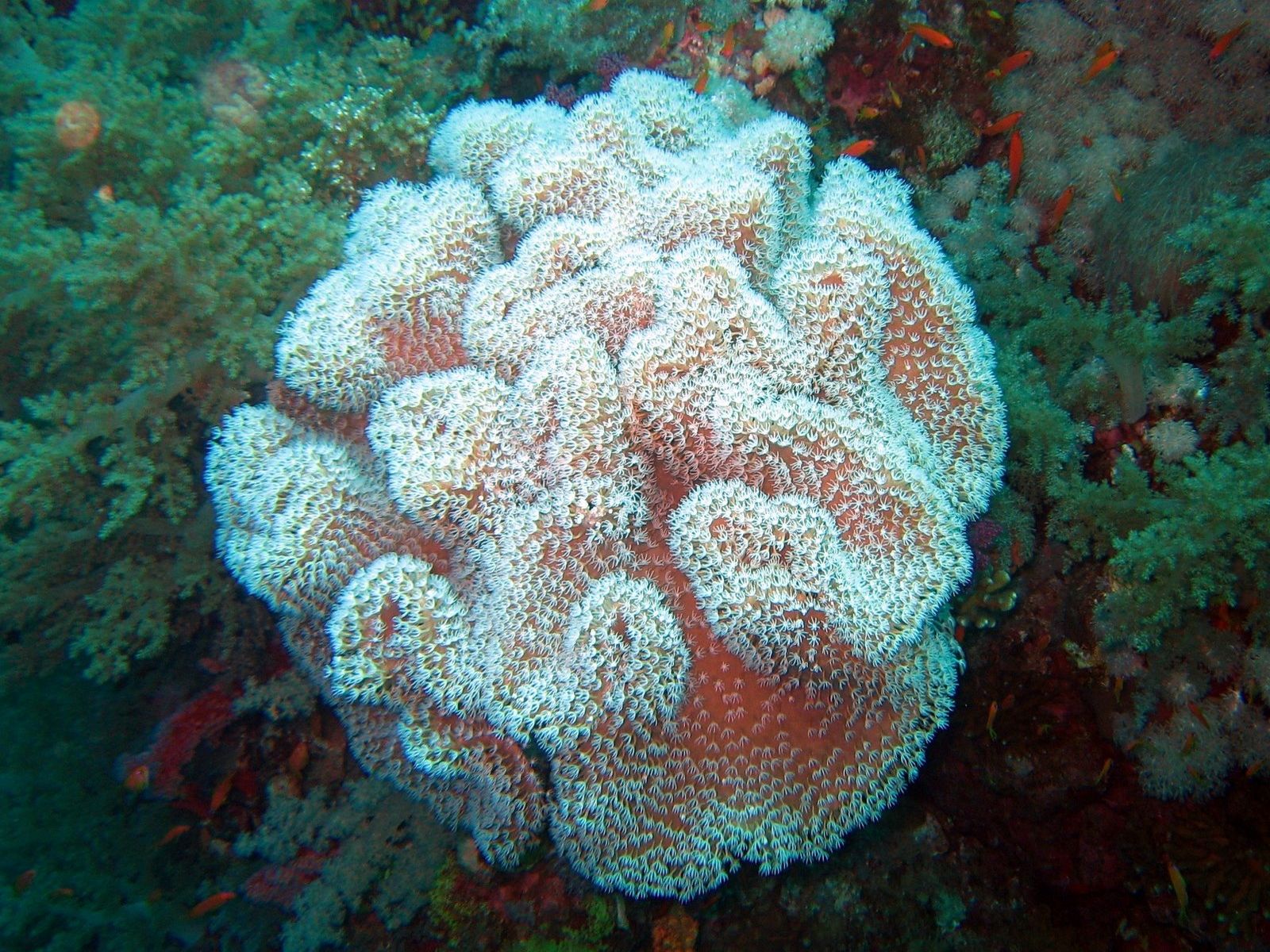
In Navel Flooding Breath, we are both relaxing and energizing our body tissues. Prana seeps through the folds of the mesentery. The mesentary is a fascial structure that along with the peritoneal sac, tethers the digestive organs to the back abdominal wall. It feels in the body like a soft undulating and waving structure. It can be very comforting to feel, and its health and suppleness are important to our vitality. The image of soft coral below is reminiscent of the inner feeling of the mesentery.

soft-coral

In Navel Flooding Breath the prana penetrates all the way through and around the organs, following the arcs and folds of the mesentary and the peritoneal sac. The stickiness that can develop in and between these tissues gets a chance to release. The organ body becomes freer and softer. Life force flows unencumbered to and from our core.

Continue reading

What is Mulabandha?

Jen Nugent - photo by Paul B. Goode

Jen Nugent – photo by Paul B. Goode

The Pit-of-the-Belly—Engagement, Relationship, and Freedom

Mulabandha maintains life-force (prana) in the body at our root. Much more than a set of specific physical actions, mulabandha holds part of the key to full embodiment. Usually described as an energetic seal, its techniques include articulating and activating the muscles at the center of the pelvic floor, with an action of drawing both the muscles and the life-force upward, into our core, and toward the lower belly region. Mulabandha seals prana into the body at our root. It assists the preservation and maintenance of vitality. It contains. But it is also more.

Mulabandha calls upon and creates a willingness of spirit to fully inhabit our lives.  As much as mulabandha seals life force at the root, it also and equally, draws life force into us. It literally pulls us down into our bodies, into the energetic hub of the central lower navel region, the same region that is recognized as the gravitational center and hub of power in all traditions. It is the tan-tien, the hara, and in yoga it is right at the root of the kanda.

Mulabandha offers the form around which we cultivate a coalescing of aspiration, surrender, and inner sensing and feeling, with the actions and shapes that draw and sustain life-force into the body-mind system. The gifts of a full, soft and resilient mulabandha are very rich. In order to open to these levels of awareness and sensation one needs to approach mulabandha from an inclusive and receptive state of mind. It involves a profound set of mental, emotional, psychological, and spiritual actions.

Looking deeply into the layers of sensation and consciousness that are part and parcel of mulabandha can be very helpful for gaining a wider and deeper perspective on our personal lives and our interrelationships with everything else. Mulabandha can be a significant tool for exploring and using the embodiment of the individual-self as a platform for inquiring into the deeper aspects of relationship and meaning. This involves a profound willingness to accept ourselves as we are, and to continue to go deeper into perception and understanding. This kind of exploration into our core is an excellent and fully embodied way to ask some of the important questions about who we are in relationship to our lives and our yoga practices. Are you willing to ask the question, “Why am I here?” without resorting to grandiosity or self-loathing? What would a purposeful existence feel like? Would it be enough to simply be yourself, do your work, and be useful? Is it okay to be a perfectly ordinary and divine human…just like 7 billion others? Can you accept the ordinary, and the extraordinary, importance of your personal dharma?

Mulabandha is a call to action – a commitment to embodied existence. Its clarity and purpose draws us into this life, to embody it fully, and be useful, useful in our own evolution as people, taking responsibility for our own lives, useful in our families, our communities, and beyond.

ENGAGEMENT AND RELATIONSHIP
A full mulabandha generates and requires a profound acceptance and dedication to doing ones part, to acting in a way that is in accordance with personal and universal evolution, a moving into greater clarity and cultivating a wider vision of who and what we are on every level, from the Pure Radiant Source of Everything, all the way through the manifest planes of existence that are both beautiful… and seriously flawed. Flawed, just like you are… Admitting and embracing the depth of your personal-and-perfectly-flawed-self is crucial to being able to recognize the full range of your beauty and radiance.

Continue reading

Embody Bliss—Ananda and Space

Awareness is at our core, and as it begins to take form it manifests outward, into increasing levels of density. Its subtlest element (manifestation) is space. Space is the home of ananda. This is the point where the Vastness takes on physical form. As Universal Awareness moves into the individual body-mind system, its first and most subtle expression is bliss, or ananda.

What is Bliss?
The coming together of Vastness and individuality is experienced as waves of bliss. Bliss is not the same as happiness that is dependent upon circumstance. In fact, happiness would not be a good way to describe the yogic experience of bliss. Yogic bliss is a deeply settled inner recognition of Unity manifesting into form. It is a sense of wholeness and inseparability from all of life that gives rise to love and compassion. Most simply put, from an individual perspective, bliss is experienced as profound and complete comfort on every level.

Always Present
No matter what the situation or the circumstances of an individual’s life, ananda is always present. Its existence is not dependent upon feeling good, and it isn’t lessened by sorrow or pain. Ananda is just always there. If we inquire deeply enough, even in times of suffering, we will see that ananda is present. At the cellular level, the cell recognizes itself to be awake and alive and immediately recognizes the entire family of cells around it to be the same.

Ananda is experienced in the body-mind as a spacious expansion of comfort and relaxation, the feeling of being at home in Universal Awareness and within one’s own skin. The experience of bliss is entirely natural and normal. You have very likely sensed it many times, and you may be aware of it already.

Pay Attention
The only reason you perhaps haven’t consciously noticed ananda is that you are usually preoccupied with something else. It is just right there, just underneath and supporting whatever else is going on within you. Ananda is most easily recognized during savasana or meditation. In quiet practices you may hear the primordial sound of Awareness moving into form. The ancient yogis call this sound Nada. Nada is expressed from the interface point where Awareness takes on form. Ananda is a whole-body-mind-support-template experienced by every cell.


For Space — Try This:
—Stand in tadasana. See and feel the space around you. Can you hear the space? In the same way that we listen to the world externally with open attention, we listen internally. Where is the space within your body?

—Try feeling your joints. Soft joints are good places to experience space. Space is everywhere. It is within our structures, around them, and supporting them. But what is the consciousness of space?

—Recline in a well-supported and comfortable savasana. Relax deeply. Follow the sensations of relaxation. You will notice a sense of comfort and release; keep going. Inquire: where is this coming from? Allow yourself to drop more deeply into the sensation until it dissolves into space, inner space. Do you hear a sound?

Practice Yoga Nidra: The Art of Blissful Relaxation
Free Audio Download—Simple Resting Practice:

Thoracic Diaphragm and its Stem

Diaphragm_openings

The thoracic (breathing) diaphragm is a broad, thin, double domed muscle with insertions around the circumference of the lower rib cage, the spine, and the lower portion of the sternum. It spans the thoraco-abdominal cavity and contains a strong central tendon, the left and right parts of which insert into one another. The thoracic diaphragm is the main muscle of the breath, and it is said that its movement is responsible for 75% of the respiratory airflow. The accessory breathing muscles are responsible for the additional 25%.

The diaphragm separates the heart and lungs above from the abdominal organs below. The heart rests on the central tendon and is connected to it by the pericardium. The heart rises and falls with the movement of the diaphragm, as do the lungs. The diaphragm is the seat of the heart and lungs. It massages, rolls, and squeezes the abdominal organs as it moves. This movement contributes to health and suppleness in the organs as they are bathed in fresh blood and fluids.

An under-recognized and under used aspect of the diaphragm is its muscular stem. The stem, or crura, is widely considered to connect only about as far as the third lumbar vertebra; however, in Embodyoga® and Body-Mind-Centering® we have found that in full use, the support of the stem can be felt all the way to the coccyx. We feel it is important to develop the use of the diaphragm all the way to the tail because we consider it to be the primary muscular support of the lumbar spine. The stem of the breathing diaphragm blends with the anterior longitudinal ligament along the front of the spine. The effect of this muscular and ligamentous support along the front of the spine through the lumbar region is absolutely critical to full integration of upper and lower body in asana. Without the use of this strong vertical support there is often a break in the pranic flow from head-to- tail and tail-to-head. This effects our experience of “integration and unity” in the posture and compromises the integrity of the spine in the bargain. Continue reading

Mesentery and Gut-Intelligence

Sensing and Feeling in the Mesentery
In our human vertebral and esoteric yogaic anatomy Manipura Chakra is the fire center. The central manipura is just behind the belly button and relates to the digestive tract and the layers of consciousness concerned with thinking, making sense of life as it is, digesting our experiences and assimilating them – or not. We have always considered the small intestinal tract to be a key in the inquiry into the expression of manipura chakra – who we perceive ourselves to be in the world.

Our mesenteries are soft tissue fascial structures woven through with vessels, fat, blood and lymph vessels, and of course, the enteric nervous system. They are complex hubs of developmental and structural support, and provide a home to intricacies of gut-intelligence. They are alive within, waving in their fluid world of the abdomen like glorious sea creatures. They explore and communicate our gut feelings with the body-mind as a whole.

Tree_fungus_cropped

This tree fungus resembles our mesentery in its shape. The thick folds of tissue are attached to the tree as their as their waving tissues search outward into the environment.

The fascial and fluid nature of the mesentery makes it an especially important structure in relationship organizing movement around our navels in yoga.

Fishingbeingeatenbyastarfish

Starfish Eating

I feel the mesentery holds a deep understanding of who we are within our navel cores. In embodiment it opens a window into the weave of our fluid underpinnings and our human experience of “gut” reality—safety, comfort, and nurturance at its most primal level. Or many times, the opposite—fear, discomfort, confusion, and misperception.

Embodying the mesentery and exploring its form and consciousness can be real window into the integration of body and mind at the navel. Very primal. If we choose, we can learn to accept ourselves as we are. These deeply fluid navel folds can provide soothing comfort when learn to release the grip and fear that we may hold in our guts. When acknowledged and allowed, we can experience our mesentery’s true fluid and undulating self. We can find them as perceptive and relational partners to the whole of our structure and consciousness. We can journey inward and assist this process through gentle, movement, breathing…and of course, self-acceptance.

Explore the mesentery in movement, breathing, and embodied anatomy in my video library.
https://www.embodyoga.com/videos
Let me know what you feel.